onsdag 4 september 2013

Somatosphere: In the Journals…July

Med en beundransvärd regelbundenhet brukar bloggen Somatosphere ta sig an skörden av nya artiklar som berör medicinsk antropologi, med mera, och summera dem - en tjänst som jag är väldigt tacksam för då slipper jag rota igenom fullt lika många på egen hand. För några veckor sen släppte de juli-uppdateringen där det förekommer flertalet spännande artiklar, däribland Limits and Limitlessness: Exploring Time in Scientific Practice av Antonia Walford, publicerad i Social Analysis 57(1)
This article explores some of the ways that time figures in the scientific practices of instrumental micrometeorology and climatic and weather modeling. It draws on ethnographic work done with the Large-Scale Biosphere-Atmosphere Experiment in Amazonia (LBA), an international scientific project that aims to assess the role of the Amazon forest in the global carbon cycle and to provide sustainable techniques for the future management of the region. An examination of the knowledge practices that have emerged from this ethnography (such as calibration and prediction) provides an opportunity to rethink the relation between 'natural time' and 'social time(s)'. This allows for a discussion of the roles that certainty, uncertainty, finiteness, and limitlessness play in both scientific and ethnographic practice.
 Blott ett smakprov från alla de som presenteras på deras blogg, så gå in och läs!

Sen så skulle jag bara vilja nämna att jag är medveten om att det blivit väldigt många rekommendationer och dylikt på sistone, och desto mindre eget material. Detta kommer (förhoppningsvis) att åtgärdas inom en snar framtid i och med att jag har flera inlägg som jag kontinuerligt skriver på. Men ursäktar mig ändå!

torsdag 1 augusti 2013

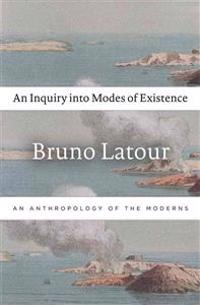
Bruno Latour släpper en ny bok!

Efter en upptagen men härlig sommar börjar jag äntligen få  lite tid över till att uppdatera mig om den facklitterära världen, och går det att få en bättre start än att se att Bruno Latour precis släppt en ny bok? (Troligtvis inte.)
Latours nya verk heter An Inquiry into Modes of Existence: An Anthropology of the Moderns och beskrivs så här:
The result of a twenty five years inquiry, it offers a positive version to the question raised, only negatively, with the publication, in 1991, of ''We have never been modern'': if ''we'' have never been modern, then what have ''we'' been? From what sort of values should ''we'' inherit? In order to answer this question, a research protocol has been developed that is very different from the actor-network theory. The question is no longer only to define ''associations'' and to follow networks in order to redefine the notion of ''society'' and ''social'' (as in ''Reassembling the Social'') but to follow the different types of connectors that provide those networks with their specific tonalities. Those modes of extension, or modes of existence, account for the many differences between law, science, politics, and so on. This systematic effort for building a new philosophical anthropology offers a completely different view of what the ''Moderns'' have been and thus a very different basis for opening a comparative anthropology with the other collectives - at the time when they all have to cope with ecological crisis.
För den som inte kan hålla sig utan direkt vill fördjupa sig går det att läsa första kapitlet samt innehållsförteckningen på Latours egna hemsida.


måndag 10 juni 2013

Videotips: Guest lecture by Professor Nikolas Rose, 'Mental Illness: Five Hard questions'

Det har kommit upp en timslång föreläsning av Nikolas Rose, som jag nämnt otaliga gånger här, kring mentala störningar som är väl värd att se.
Abstract:  In this talk I want to characterize the ‘territory’ of mental illness today by posing five hard questions that seem to me to represent genuine empirical, conceptual, professional and ethical dilemmas.   My questions are: Is there an‘epidemic’ of mental disorder?;  Does the path to understanding mental disorder lie through the brain?;  What is the role of diagnosis and of diagnostic manuals?;  Should we seek early identification of those at risk of future mental pathology? What is the place of patients, users, survivors, consumers in the mental health system?  On the basis of this discussion, I will conclude by trying to draw out some lessons for the politics of mental health today.
Se den här.

torsdag 30 maj 2013

Bloggen är inte död, den lever bara inte för tillfället

På grund av saker som händer runtomkring så har jag inte hunnit skriva särskilt mycket här, trots att det finns så spännande händelser att skriva om. Det kommer bli bättring alldeles snart hoppas jag, tills dess får vi alla försöka hålla ut! Som plåster på såren så kan vi begrunda Heideggers kloka (?) reflektion över objektens realitet. 

lördag 4 maj 2013

The National Institute of Mental Health distanserar sig från DSM-V

Nyligen utannonserades en - potentiellt super- - gigantisk nyhet: the National Institute of Mental Health kommer inte längre utgå från DSM-V som sin gyllene standard när det kommer till psykiatrisk forskning. Den nya utgåvan av DSM kommer ut nu precis i början på sommaren och har blivit väldigt omdebatterad ända från början, men att NIMH nu tar avstånd från den är absolut en omskakande händelse. Läs mer på bloggen Mindhacks.


torsdag 11 april 2013

Ny bok i Foucaults föreläsningsserie: The Will to Truth

I dagarna kommer ytterligare en bok från Foucaults föreläsningar på College de France, denna gång från åren 1970-1971. "Lecture on the will to know" heter bandet och beskrivs så här:
"The Will to Know" reminds us that Michel Foucault's work only ever had one object: truth. Here, he builds on his earlier work, "Discipline and Punish," to explore the relationship between tragedy, conflict, and truth-telling. He also explores the different forms of truth-telling, and their relation to power and the law. The publication of "The Will to Know" marks a milestone in Foucault's reception, and it will no longer be possible to read him in the same way as before.
Ni hittar den på Adlibris.

tisdag 9 april 2013

Artikeltips: Watching the watchers: lessons from the science of science advice

Brittiska The Guardian publicerade häromdagen en artikel av Sheila Jasanoff, professor i Vetenskaps- och teknologistudier, där hon reflekterar över betydelsen av att inkludera STS (Science and Technology Studies) i utvärderingen av hur vetenskap förstås och tillämpas. Särskilt skriver hon om när råd och instruktioner från den vetenskapliga världen implementeras inom de politiska och offentliga sfärerna utan att granskas eller problematiseras, en brist som verkligen bör rättas till.
It is time for science advisory systems to recognise that – to stay honest – they too need critics from the communities of research studying how knowledge and action are linked together. In democracies, no institutions of power should be beyond critique. If judges may not presume to stand above the law, still less should science advisers seek to insulate themselves from the critical gaze of the science of science advice.
För hela artikeln, se Watching the watchers.